
Vitamin D: Essential Benefits & How to Take It Safely

Why Vitamin D is so Important
Often called the “sunshine vitamin”, vitamin D is actually a powerful hormone that plays a crucial role in your overall health. It supports everything from strong bones and balanced mood to immune resilience and cardiovascular function. Yet despite its importance, vitamin D deficiency is incredibly common worldwide, largely due to indoor lifestyles, limited sun exposure, and poor dietary sources.
In this article, we’ll explore the key health benefits of vitamin D, why so many people are deficient, and how to supplement Vitamin D safely and effectively to avoid risks like hypercalcemia.
Key Roles of Vitamin D

- Supports bone and cardiovascular health
- Regulates blood sugar and blood pressure
- Improves insulin sensitivity
- Boosts immune function
- Supports mood and brain health
Unfortunately, many people worldwide are deficient in vitamin D, which can lead to depression, fatigue, frequent infections, arthritis, inflammation, blood pressure and blood sugar issues, and more, and can put you at risk or increase the severity of autoimmune diseases, which include:
- Multiple sclerosis (MS)
- Graves’ disease
- Lupus
- Rheumatoid arthritis
- Type 1 diabetes
- Vitiligo
- Hashimoto’s thyroiditis
Why You May Need to Take a Vitamin D3 Supplement
We always recommend getting your vitamins and supplements from natural sources rather than from supplements wherever possible. However, the sad reality is that most people simply can’t get the required amounts of vitamin D and its important cofactors from natural sources alone.
 The official recommended daily allowance (RDA) for Vitamin D is about 600 IU (International Units). However, this amount is based mainly on preventing bone loss, not on the other critical functions described above, and is therefore far too low. Instead, based on research, a maintenance dose of between 5 000 IU and 10 000 IU daily is recommended for most people, especially in winter or low-sun environments.
While you can easily get 10,000 IUs of vitamin D3 from being out in the sun for 30 minutes a day, the reality is that most people don’t go in the sun every day, and when they do, their skin is covered with clothing or sunscreen. You also cannot get enough vitamin D from your diet alone, as foods contain relatively little vitamin D.
Also, people with darker skin need more sun exposure or supplementation, because the higher melanin pigment in their skin blocks the UV rays, leading to a higher risk of Vitamin D deficiency.
The result is that if you don’t get sun every day, then you may need to consider supplementing with a high-quality vitamin D3 supplement like the 5 000 IU Vitamin D3 supplement by Now Foods.
How to Take Vitamin D3 Supplements Safely
Anytime you take vitamin D3, you also need to take its three important cofactors, Magnesium, Vitamin K2 and Zinc, because:
- Magnesium helps activate vitamin D3. Without enough magnesium, your body can’t properly use the D3 you take. We recommend 320 – 420mg of Magnesium Glycinate due to its superior bioavailability.
- Vitamin D3 helps your body absorb calcium, but without vitamin K2, that calcium can end up in your arteries and soft tissues instead of your bones, a condition called hypercalcemia that raises your risk of heart disease and calcification.
- Vitamin K2 acts like a traffic director, guiding calcium to where it’s needed most, your bones and teeth. There are two types of Vitamin K2, MK-4 and MK-7. We recommend the MK-7 type of Vitamin K2, because it stays in your system much longer, has a longer half-life, offers more stable blood levels, and is better at directing calcium to your bones and away from your arteries.
- Vitamin D also needs zinc to activate certain genes. These genes are involved in regulating mineral absorption, particularly calcium and phosphorus, and other important bodily functions. Vitamin D and zinc also help with calcium absorption and bone remodelling, and deficiencies in either can lead to osteoporosis or other bone-related issues.
When to Take These Vitamins
 Vitamin D3 and K2 are fat-soluble vitamins and should therefore be taken with a meal that includes healthy fats like Avocado, Olive oil, Nuts, and Eggs etc to improve absorption and effectiveness.
If you suffer from any sleep issues, taking Vitamin D in the morning or at lunch might be better as some studies suggest taking Vitamin D3 at night may affect melatonin production, therefore affecting your sleep.
Magnesium can be taken at the same time as your Vitamin D, or at night if you are taking Magnesium Glycinate and need help sleeping. Split the dose, 200 mg in the morning and 200 mg in the evening for better all-day support.
Zinc can be taken on an empty stomach, but if it causes nausea or an upset tummy, take it with food.
The Recommended Ratios
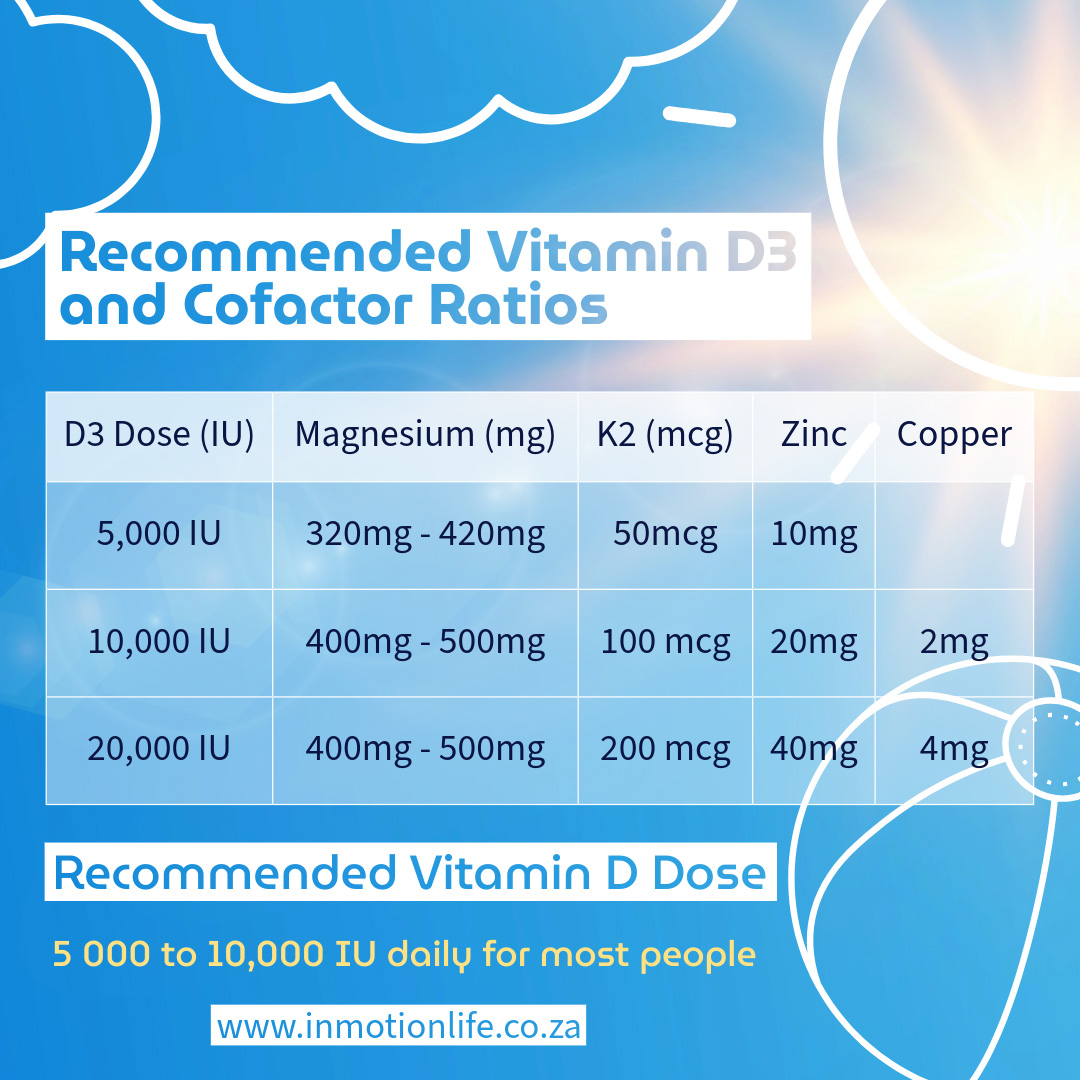
The recommended ratio of Vitamin D3, Magnesium, K2 and Zinc according to Dr. Berg and other leading health experts is for every 10,000 IU of Vitamin D3, take 100 mcg of Vitamin K2 (MK-7) and 20mg of Zinc. If you are taking 20mg or more of Zinc, you should also take copper to avoid a copper deficiency.
| D3 Dose (IU) | Magnesium (mg) | K2 (mcg) | Zinc | Copper |
| 5,000 IU | 320mg – 420mg | 50 mcg | 10mg | |
| 10,000 IU | 400mg – 500mg | 100 mcg | 20mg | 2mg |
| 20,000 IU | 400mg – 500mg | 200 mcg | 40mg | 4mg |
Pro Tip: Make sure the amount of Magnesium you are taking is the elemental Magnesium value, as some vitamin brands can be misleading with their marketing claims on the packaging.
Recommended Vitamin D Dose
Most health experts recommend a maintenance dose of between 5 000 and 10,000 IU daily for most people. This sounds like a lot, but is in fact a very small amount if you covert the IUs to milligrams:
10 000 IU = 250 micrograms = 0.25 milligrams
The exact amount you need will depend on your skin type and how often you go in the sun. If you are unsure, consider having your vitamin levels tested to ensure you aren’t wasting money taking more supplements than you need…
Vitamin D3 & Cofactor Ratios Infographic
For quick and easy reference, download this handy infographic on the recommended Vitamin D3 and cofactors ratios, or share it on Instagram or Pinterest…
Signs of a Vitamin D Deficiency
There is no clear medical consensus on what exactly defines vitamin D deficiency; however, Vitamin D deficiency is a common global issue. About 1 billion people worldwide and approximately 35% of adults in the United States have a vitamin D deficiency, while 50% of the world’s population has vitamin D insufficiency.
South Africa and Africa in general also have high rates of Vitamin D deficiency, as shown in this systematic review and meta-analysis study: Prevalence of vitamin D deficiency in Africa.
Signs and Symptoms of vitamin D deficiency may include:
- Fatigue
- Not sleeping well
- Lower back pain
- Arthritis, bone pain or achiness
- Autoimmune diseases
- Depression or feelings of sadness
- Hair loss
- Inflammation or muscle weakness
- Loss of appetite
- Weakened immune system or getting sick more easily
- Dry inflamed skin & acne
- High blood pressure
- Sleep apnea & snoring
Here are 7 ways to boost your Vitamin D levels.
Natural Sources of Vitamin D, Magnesium, K2 and Zinc

Vitamin D3
You can get 10,000 IUs of vitamin D3 from being out in the sun for 30 minutes a day, as Ultraviolet rays convert cholesterol to vitamin D3 in your skin.
Fatty fish or cod liver oil (cod liver oil also provides vitamin A and D, unlike fish oil supplements), eggs and beef liver.
Magnesium
 Because magnesium is a key component of chlorophyll, eating leafy greens like salads, as well as magnesium-rich foods like pumpkin seeds, dark chocolate, and nuts, can help boost your magnesium levels naturally.
Vitamin K2
Animal-Based (MK-4 Form):
- Grass-fed butter and ghee
- Egg yolks (especially pasture-raised)
- Liver (goose, chicken, beef)
- Salmon (wild-caught)
Fermented Foods (MK-7 Form):
- Hard and soft cheeses (especially from France)
- Sauerkraut
- Natto (fermented soy from Japan)
Modern diets tend to avoid these foods, especially due to outdated fears about fat, contributing to widespread K2 deficiency.
Zinc
You can get zinc naturally from red meat and shellfish.
Vitamin D Toxicity Concerns
Vitamin D toxicity is very rare, and taking 10,000 IU of vitamin D3 daily is generally safe for most people, especially when combined with vitamin K2, magnesium, zinc, and adequate hydration.
Toxicity usually occurs only with extremely high doses (hundreds of thousands of IU over months). The main risk is hypercalcemia (too much calcium in the blood), which can cause kidney stones. To prevent this, drink plenty of water (around 2.5 Litres per day) and avoid taking large doses of calcium supplements.
Summary
Most of us are likely deficient in Vitamin D and therefore need to take between 5 000 and 10 000 IUs of a Vitamin D3 supplement daily.
When taking vitamin D3 supplements, always include its cofactors, Magnesium, K2 (MK-7) and Zinc to improve absorption and prevent hypercalcemia.
We hope this guide has been helpful, however, if you have any questions or concerns, or you would like to share your own thoughts and experiences with Vitamin D supplements and its cofactors, please post them in the comments below.


Leave a Reply
Want to join the discussion?Feel free to contribute!